Sounds of India: Akash Parekar and Janan Sathiendran

The strings of the sitar have always known how to fill a sacred space. At St Martin-in-the-Fields, where centuries of collective reverence live in the walls, Darbar brings the ancient soul of Indian classical music home to one of London’s most beloved churches.

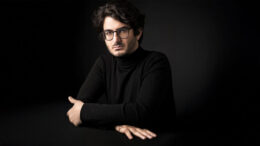
Akash Parekar is one of the most exciting voices in a new generation of British-born sitar players. Beginning his journey at just eighteen, he has since studied under a lineage of masters including the renowned Roopa Panesar, Ustad Dharambir Singh MBE, and Ustad Irshad Khan, son and disciple of Ustad Imrat Khan. Rooted in both Western classical and contemporary music, Akash brings a fresh sensibility to the sitar without losing sight of its deep spiritual core. His collaborative work spans Glastonbury to the recording studio, with artists as varied as Zak Starkey and Mayur Navekar, and he is currently completing his debut album.

Joining him is tabla player Janan Sathiendran, whose training spans both Hindustani and Carnatic traditions under Shri Sukhdeep Singh Dhanjal and Pandit Yogesh Samsi. Raised in London in a home rich with musical diversity, Janan has shared stages with Nitin Sawhney, A.R. Rahman, and Abi Sampa.

In a church built on centuries of shared reverence, these two artists bring music that has always understood the distance between the human and the divine is measured not in doctrine, but in sound.

Christmas Around The World

A vibrant celebration of Christmas around the world, this programme brings together traditional carols from Europe, the Americas, and beyond. From the familiar warmth of Silent Night by Franz Xaver Gruber and O Tannenbaum to the joyful energy of Joy to the World and Go Tell It on the Mountain, these songs reflect a rich variety of languages, cultures, and festive traditions.

A Renaissance Christmas

A celebration of Christmas through the luminous choral music of the Renaissance. This programme traces the story from Advent reflection to the joy of Christmas Day, with works by William Byrd, Thomas Tallis, Tomás Luis de Victoria, and Orlando di Lasso.

Featuring music for voices alone, ranging from intimate devotion to rich celebration, this programme captures the mystery, wonder, and joy of the Christmas story.

Quartet XII: Haydn – The Seven Last Words from the Cross

Haydn’s Seven Last Words from the Cross: deep faith and even deeper emotion, brought to life today by the superb Quartet XII, musicians from The 12 Ensemble.

A darkened church, seven anguished words…and the musical challenge of a lifetime. In 1786, Joseph Haydn was asked to write seven wordless meditations for the most profound moment in the Christian calendar, and his imagination caught fire. The Seven Last Words from the Cross are charged with pity, tenderness and intense emotion. Haydn thought they were his masterpiece and there’s something profoundly moving about hearing them played live in a great church at this time of year. This is music to light up the soul, and Quartet XII – four members of the dynamic 12 Ensemble – keep the flame today.

A Classic FM Father’s Day Celebration with Zeb Soanes

Celebrate Father’s Day with a vibrant musical journey through classical music’s greatest families. From the Bachs’ extraordinary dynasty to Leopold and Wolfgang Amadeus Mozart’s remarkable father-and-son partnership, and the richly contrasting voices of the Haydn brothers – Franz Joseph’s wit and invention alongside Michael’s lyrical warmth – to the creative bond of Felix and Fanny Mendelssohn, this concert explores how music is shared, shaped, and passed on. Join Classic FM presenter Zeb Soanes and St Martin’s Voices for a heartfelt, uplifting celebration of family, legacy, and the joy of music.

Matan Porat, piano

From the gentle rocking of Chopin’s Barcarolle to the sunlit landscapes of Beethoven’s “Pastoral” Sonata, this programme explores music inspired by nature, memory and imagination. Debussy’s Prélude à l’après-midi d’un faune, heard in Matan Porat’s evocative piano arrangement, drifts between dream and reality, while the opening movement of Schubert’s A major Sonata unfolds with warmth and effortless lyricism. Ligeti’s sharply contrasted miniatures from Musica Ricercata bring a more modern voice, by turns playful and mysterious. Together, these works trace a journey through changing musical landscapes, united by their vivid colours and sense of discovery.

Intesa Duo (voice and gamba)

Join Intesa – a self-accompanying voice and viola da gamba duo – on a journey to the Venetian island of San Lazzaro. For the past 300 years, this tiny island has been home to an Armenian monastery and a vital centre of cultural preservation, exchange, and scholarship. Voices of San Lazzaro explores Venice as both a hub of musical composition and publishing in the 17th century, and as a historic bridge between East and West. The programme includes works by Giulio Caccini and his daughters Settimia and Francesca, alongside Monteverdi, Lassus, and Strozzi, interwoven with traditional Armenian melodies, ancient chants, and excerpts from the Armenian Divine Liturgy.

Cyrill Ibrahim (piano)

This piano recital traces a journey from psychological intensity to clarity and resolve. The programme opens with the driving pulse of Philip Glass, before moving into the dramatic tension of Mozart’s A minor Sonata. At the heart of the concert stands Chopin’s Third Piano Sonata — a work of vast emotional scope that brings together intimacy, conflict, and architectural power. The recital concludes with Chopin’s “Heroic” Polonaise, transforming inward struggle into a statement of dignity and strength. Throughout the programme, brief spoken reflections offer insight into the music and its emotional landscape, inviting listeners to experience the concert not only as a sequence of works, but as a connected musical journey.

Rokas Valuntonis (piano)

Pianist Rokas Valuntonis returns to St Martin’s with a programme showcasing his ‘liquidity of sound’ spanning German Romanticism and French Baroque. The recital begins with Beethoven’s “Pathétique” Sonata, a work famous for its shift from intensity to the beauty of its celebrated Adagio. This is paired with Grieg’s Album Leaves, four poetic miniatures that capture the folk-inspired lyricism of Norway, and a selection of Couperin’s keyboard works.

The performance concludes with Chopin’s lyrical and virtuosic Andante Spianato and Grande Polonaise Brillante, serving as a brilliant finale to this lunchtime concert.


Violetta Suvini (violin) and Henry Lewis (piano)

Violinist Violetta Suvini and pianist Henry Lewis showcase three contrasting works: Ravel’s youthful Sonate Posthume, Beethoven’s maverick Sonata No. 4 in A minor, and the folkloric idiom of Janáček’s Violin Sonata.

Unpublished until 1975, decades after Ravel’s death, this charming early work comprises only a single movement, and is thought to be a sketch written for Fauré’s composition class as Ravel’s first exploration of sonata form. It conveys a light, youthful feeling through its explorative melodies, and demonstrates Ravel’s early skill in constructing luminous, shifting harmonies.

Beethoven’s early sonatas are noted for involving the violin in a more equal partnership with the then-dominant fortepiano. Though the 4th Sonata is often overshadowed by the ‘Spring’ Sonata (No.5), the former marks “a notable advance in dramatic style over its predecessors” (Heeney). Described by Lockwood as “the wayward stepchild among Beethoven’s violin sonatas”, its quick changes of mood, condensation of form, strides towards unorthodox modulations, and unexpected rhythmic qualities, leave a strong impression.

“Janáček’s music is steeped in the folk music idioms and speech patterns of his Moravian homeland: he claimed “the whole life of man is in folk music”. This composer’s material follows closely the inflections, cadences and rhythms of the Czech language.” (Markow). His unique musical expression can be heard in the rhythmic and melodic fragments which are repeated and juxtaposed between the violin and piano. The second movement ‘Ballade’ was written first as a stand-alone piece, before finding its place as the lyrical heart of this sonata.