
The Sixteen: Choral Pilgrimage 2026

Spain’s Siglo de Oro, the Age of Gold, gave rise to some of the greatest sacred choral music of the Renaissance. The Sixteen and Harry Christophers devote their latest Choral Pilgrimage to pieces by two outstanding Spanish composers.

They explore majestic works by Cristóbal de Morales, famed throughout Europe and in the New World, and the exquisite polyphony of Sebastián de Vivánco, whose intricately crafted counterpoint adorned services at the cathedrals of Ávila and Salamanca during the late 1500s.

Their programme also features spellbinding settings of words by Saint John Henry Newman: Sir James MacMillan’s Nothing in Vain for soloists and double choir and the world premiere of Kerensa Briggs’ Lead, Kindly Light, specially commissioned for the Choral Pilgrimage.
 

The 12 Ensemble: Vivaldi Recomposed

Fresh, direct and dazzlingly virtuosic, 12 Ensemble is an orchestra with a radical difference – a collective of fiercely committed young artists, determined that every note they play should speak to audiences right here and right now.

And even though Max Richter’s visionary reboot of Vivaldi’s Four Seasons has been a worldwide phenomenon, make no mistake: 12 Ensemble has something of their own to say, creating sounds that are both instantly familiar and unforgettably new. They cause a sensation at St Martin-in-the-Fields every year; this is another chance to experience a truly 21st century meeting of musical minds.


The 12 Ensemble: If You Love Me

Join the 12 Ensemble for ‘If You Love Me,’ a programme exploring the spiritual, the emotional, and the sublime through profound string music.

The programme features two masterpieces that engage with memory and devotion: Tallis’s gentle anthem If ye love me and Vaughan Williams’s monumental Fantasia on a Theme of Thomas Tallis. The Fantasia is a breathtaking string soundscape that immerses the listener in reverence, directly elaborating on Tallis’s original melody.

The mood shifts to dramatic contrasts: the sacred power of Bruckner’s Ecce Sacerdos Magnus offers solemn majesty, while Oliver Leith’s Honey Siren provides modern intrigue with its alluring, mysterious soundworld.

Finally, we come to Mahler’s iconic Adagietto from Symphony No. 5: this serene and deeply emotional movement, often associated with a love letter to his wife Alma, provides a breathtaking and unforgettable conclusion to the exploration of love’s powerful and enduring themes.

Experience music that speaks to the heart, brought to life by the 12 Ensemble.

Sounds of India: Resonance

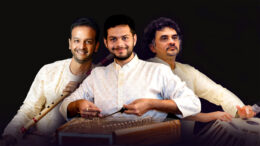
Resonance: Ode to Call of the Valley brings together three of Indian classical music’s most expressive voices in an intimate trio performance. Santoor virtuoso Ninad Daithankar and bansuri exponent Saurabh Vartak are joined by accomplished tabla artist Saleel Tambe, creating a rich and evolving musical conversation rooted in the Hindustani tradition.

Ninad Daithankar plays the santoor—a hundred-stringed trapezoid instrument from Kashmir, struck with lightweight wooden mallets. A Citi–NCPA Scholar, he has performed extensively across India, Europe, and North America. Saurabh Vartak performs on the bansuri, the bamboo flute deeply associated with Lord Krishna. Based in Pune, he regularly performs alongside the legendary Pandit Hariprasad Chaurasia and runs his own academy dedicated to preserving and passing on this lineage.

In this trio setting, melody and rhythm unfold collaboratively within a chosen raga (melodic framework) and tala (rhythmic cycle). The santoor and bansuri weave and exchange melodic phrases while the tabla anchors, accents, and propels the music forward. As the performance develops, the interplay becomes increasingly layered and dynamic, culminating in a fluid three-way dialogue. The bell-like resonance of the santoor, the warm, breathy tone of the bansuri, and the rhythmic clarity of the tabla together create a soundscape that is both meditative and exhilarating.

Sounds of India: Jesse Bannister and Jasdeep Singh

What happens when the warm, winding tones of jazz saxophone meet the ancient percussion of jori? You get something rare, an experience that is both meditative and thrillingly experimental.

This fusion is no accident. Jesse Bannister, born of mixed Indian and British heritage, has spent his career bridging musical worlds with daring intention. Trained under Pandit K. Sridhar, he has composed for the Hallé Orchestra, Royal Liverpool Philharmonic, and City of London Sinfonia, and collaborated with luminaries including Talvin Singh, Bickram Ghosh and Aruna Sairam. His project In Tune draws together Indian classical music, orchestral composition, and sound healing into a single, cohesive vision, performed across England at the London Jazz Festival, Darbar, Bridgewater Hall, and the QEH.

Anchoring the rhythm is Jasdeep Singh, a dedicated jori exponent who is on a mission to restore this ancient double-headed drum to its rightful place at the heart of Indian classical music. Long used as an accompanying instrument, Jasdeep believes the jori deserves to be heard as a lead voice, rich in texture, expressive in tone, and steeped in centuries of tradition.

Where jazz breathes and tradition pulses, something extraordinary takes shape.

Sounds of India: Chandra Chakraborty

Chandra Chakraborty is one of Britain’s foremost Indian classical vocalists, specialising in khayal—the predominant vocal form of North Indian classical music. A Gold Medallist of All India Radio and former scholar of the Sangeet Research Academy, she has performed at the Southbank Centre, the House of Commons, and for Her Majesty the Queen. She is accompanied by esraj (a bowed string instrument) and tabla.

Khayal, meaning ‘imagination’, gives the singer freedom to improvise within a chosen raga. The performance typically begins with an unmetered alaap—a slow, wordless exploration of the raga’s notes and phrases—before introducing a bandish (composition) set to a tala. The singer then develops the raga through techniques including taan (rapid melodic passages) and bol (rhythmic play with the song’s lyrics). The esraj mirrors and responds to the voice, while the tabla maintains the rhythmic cycle and engages in dialogue with the singer.


Serenade to Music by Candlelight

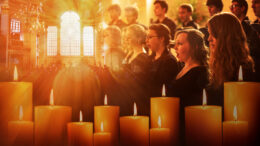
Blending rich choral tradition with atmospheric contemporary sounds, St Martin’s Voices, the St Martin’s Choral Scholars and the Academy of St Martin in the Fields present a programme that moves from joyful celebration to quiet transcendence.

The evening opens with Gerald Finzi’s jubilant God is Gone Up, a work of buoyant energy and lyrical warmth. At its heart lies Ralph Vaughan Williams’ much-loved Serenade to Music, a luminous meditation on the beauty and expressive power of music itself.

New music brings a fresh perspective: the world première of O for a muse of fire by Lucy Walker ignites the imagination, while Tyler Futrell’s In Paradisum (from Rest: Requiem) offers a moment of serene reflection.

The programme culminates in Ola Gjeilo’s Sunrise Mass, a sweeping and atmospheric work that carries the listener from darkness into light.

Purcell Dido and Aeneas by Candlelight

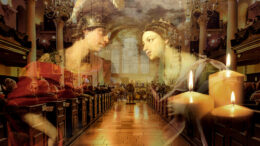
Join the Chamber Choir and Emerging Artists of St Martin-in-the-Fields for a concert performance of this early gem of opera in English, portraying the ill-fated romance of tragic Queen Dido and Trojan hero Aeneas.

The wonderfully varied Baroque score by Henry Purcell features pastoral idylls, cackling witches and lusty sailors, alongside scenes of poignant tragedy and immense beauty.


Oxford Philharmonic Orchestra: The Art of Baroque Concerto

The Oxford Philharmonic Orchestra presents a vibrant Baroque showcase featuring dazzling concerti by Bach and Vivaldi, alongside Telemann’s playful ‘Burlesque de Quixotte’. An evening of virtuosity and exuberant ensemble brilliance awaits!

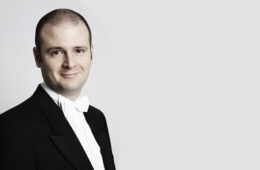
Celebrating the Art of Baroque Concerto, conductor Marios Papadopoulos steers the Oxford Philharmonic Orchestra through a programme of youthful energy and dazzling virtuosity. Led by the orchestra’s rising stars, this concert highlights concerto masterpieces by Baroque greats Bach, Vivaldi and Telemann. Full of colour, conversation, and exuberance, this concert is a chance to experience Baroque music at its most exhilarating.